Northern Peru
Why we send travelers north — and why almost nobody else does
Chan Chan is the largest adobe city ever built in the Americas. On a Tuesday morning you may be the only person in it.
Published 18 September 2026 · Atlantis Peru Travel
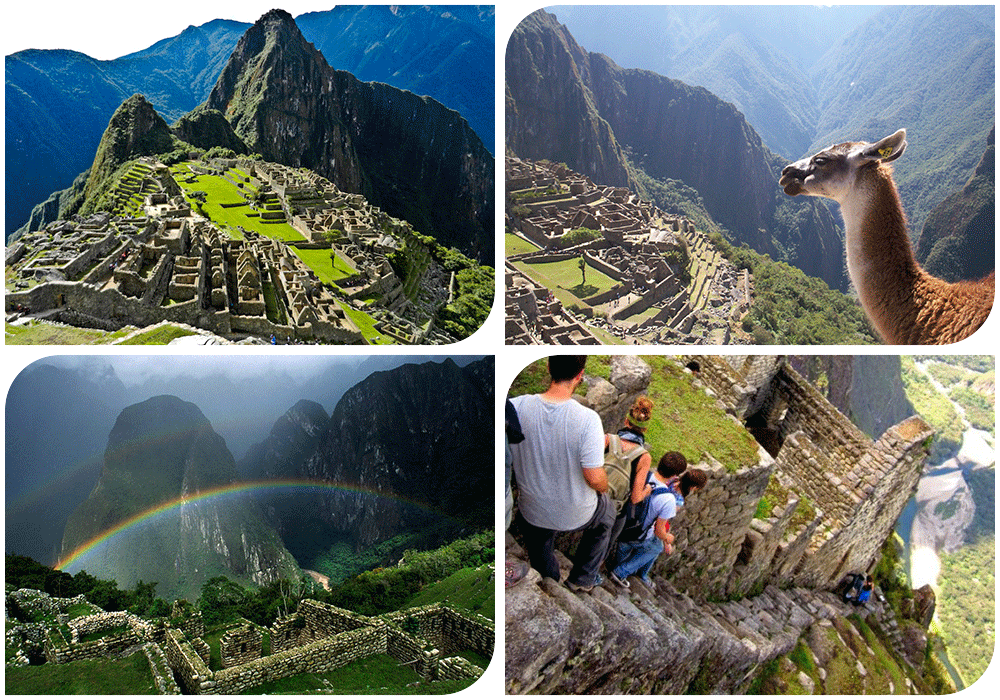
Ask ten travel agencies for a Peru itinerary and nine will send back the same one: Lima, Cusco, Sacred Valley, Machu Picchu. It is a magnificent route. It is also the route that four out of five international visitors take, which is why the Inca Trail now runs on a permit lottery and why photographs of the citadel contain more people than stone.
The north is a different country.
Chan Chan is bigger than you are imagining
The Chimú capital covered twenty square kilometres and housed perhaps sixty thousand people. It is the largest adobe city ever built anywhere in the Americas, and it was raised entirely without stone, in a desert, by a civilisation that fell to the Incas only sixty years before the Spanish arrived.
Most mornings you will share it with a caretaker and some Peruvian hairless dogs.
The Lord of Sipán changed what we knew
In 1987 a looters’ tunnel in a mound outside Chiclayo led archaeologists to a tomb that had never been opened. Inside was a Moche ruler buried with gold, turquoise and the remains of eight attendants. It is routinely compared to Tutankhamun’s tomb, and the comparison is not marketing: it is the richest intact burial ever excavated in the Western Hemisphere.
The museum built to hold it is one of the finest in South America. It receives a fraction of the visitors of any Cusco site.
Kuélap holds more stone than the Great Pyramid
Six hundred metres long, walls twenty metres high, built by the Chachapoya — the “cloud people” — centuries before the Incas arrived to conquer them. It sits at 3,000 metres in cloud forest, and since the cable car opened you no longer need a four-hour horse ride to reach it.
Nearby, the Gocta waterfall drops 771 metres in two tiers. Local people knew about it for generations. The outside world did not formally document it until 2005.
What this means for your trip
We are not suggesting you skip Machu Picchu. We are suggesting that eight days in the north, either before or after the classic route, gives you something the standard itinerary cannot: the experience of standing somewhere extraordinary without a queue behind you.
Our base is in Trujillo. This is not a region we read about — it is where we live.